×

My neighbor swears by it. Every year she puts a big scoop around each tomato plant. She says it makes her tomatoes huge. I used to do the same thing. Until I learned what really happens.
Let me tell you what I found out.
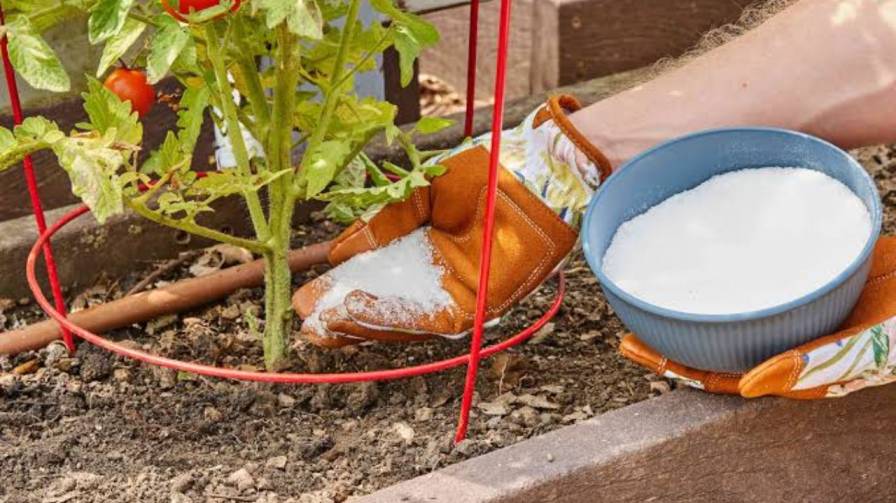
You probably have a box in your laundry room. People use it for baths. Sore muscles. That kind of thing.
But it is not actually salt like table salt. Table salt will kill your plants. Epsom salt is different. It is magnesium and sulfur mixed together. The fancy name is magnesium sulfate but nobody says that.
Plants need magnesium. It helps them make their food. Without it they struggle. The leaves turn yellow and the plant looks sick. Sulfur is also good. It helps the plant take up other food from the soil. So yeah Epsom salt has stuff plants can use. But here is the thing. Most soil already has enough of this stuff.
Read Also: Best Vegetables For Small Backyard Gardens
Walk into any garden center and ask about tomatoes. Someone will tell you to use Epsom salt. I have heard it a hundred times.
People say it stops blossom end rot. That is that ugly black spot on the bottom of the fruit. People say it makes more tomatoes. Bigger tomatoes. Greener leaves.
I used to believe all of it.
My grandfather used Epsom salt on his tomatoes. He had great tomatoes. I figured that was why. Now I think he just had good soil and knew how to water.
Here is the honest truth. Epsom salt helps when your soil is low on magnesium.
How do you know if your soil is low? You get a test. You send a little dirt to a lab or use a home kit. That tells you exactly what your soil has and what it needs.
Some soils are naturally low in magnesium. Sandy soil especially. Rain washes the magnesium right out. If you have sandy soil and get heavy rain you might have a problem.
You might also have a problem if you use too much potassium fertilizer. Potassium blocks magnesium. The plant cannot take it up even if it is there.
So what does low magnesium look like? Look at the bottom leaves first. The veins stay green. But the space between the veins turns yellow. Not the whole leaf at first. Just patches. Then more yellow. Then maybe purple.
If you see that and your soil test says low magnesium then Epsom salt can fix it.
This part is important.
Epsom salt does not fix blossom end rot. I wish I had known this years ago. I would have saved a lot of tomatoes. Blossom end rot is a calcium problem. The plant cannot get enough calcium. Usually because watering is uneven. The soil dries out then gets soaked. The plant gets stressed.
Calcium moves with water. When watering is not consistent the plant stops taking up calcium. The fruit suffers.
Adding Epsom salt makes this worse. Magnesium and calcium fight each other. The plant can only take up so much of each. Too much magnesium means less calcium. The rot gets worse.
I learned this the hard way. I kept adding Epsom salt thinking it would help. My tomatoes kept rotting. I was making it worse.
Epsom salt also does not stop bugs. Does not feed the plant like fertilizer. Does not replace nitrogen or phosphorus or potassium. Those are the big three nutrients plants actually need.
Using Epsom salt when you do not need it causes problems.
Too much magnesium blocks calcium. I already said that. But it also blocks potassium. Potassium helps plants make flowers and fruit. Without it you get fewer tomatoes.
The salt can build up in your soil. Year after year it adds up. Then your plants have trouble taking up water. The roots get damaged. The plant looks worse than before.
You May Also Like: Eco Friendly Gardening Tips For Sustainable Homes
Okay so you got a soil test. It says low magnesium. You see yellow leaves. Now what. Get some plain Epsom salt from the store. Not the scented kind for baths. Just plain.
Mix one tablespoon in one gallon of water. Stir it well. Pour it around the base of the plant. Do this when the soil is already damp. That helps it soak in. You can also spray the leaves. Mix the same amount. One tablespoon per gallon. Put it in a spray bottle. Spray the leaves early in the morning or late in the day. Not when the sun is strong. Wet leaves in bright sun burn.
Do this every two to four weeks. But stop if the leaves get better. You do not need to keep going. Remember to start with less. You can always add more later. You cannot take it out once it is in the soil.
Forget the Epsom salt for a minute. Focus on the basics. That is what works. Test your soil. Do it every couple of years. Know what you are working with. Then you know what to add and what not to add.
Water your tomatoes the same way every time. Do not let them dry out completely. Do not drown them. Mulch helps. Put straw or wood chips around the plants. Keeps the moisture steady. Steady moisture means steady calcium uptake. No blossom end rot. Use a real fertilizer made for tomatoes. Look at the numbers on the bag. Nitrogen. Phosphorus. Potassium. Those are what plants need most. A good tomato fertilizer has all of them. Some fertilizers also have magnesium. Read the label. If it is in there you do not need Epsom salt.
I used Epsom salt for years. I thought I was helping my plants. Now I know better. The stuff is not magic. It is not poison either. It is just a mineral. It has a specific job. It fixes a specific problem. That problem is not common in most gardens. Most soil has enough magnesium. Most tomato problems come from watering or lack of real fertilizer.
So before you grab that box from the laundry room stop and think. Have you tested your soil? Do you actually see yellow leaves between the veins? Are you sure it is not something else? If you are not sure do not add it. You could make things worse.
If you are sure and your soil test agrees then go ahead. Use a little. See what happens. If the leaves green up you fixed the problem. If nothing changes then the problem was something else. At least you know. Growing tomatoes is not about one miracle cure. It is about doing the small things right. Good soil. Consistent water. The right food at the right time.