×
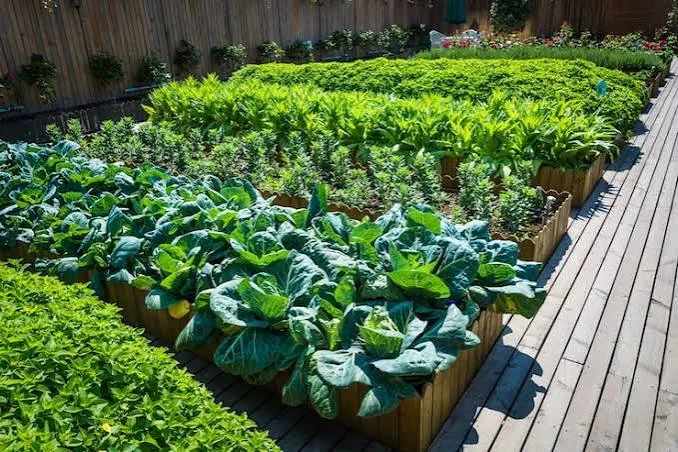
A well-planned vegetable garden layout can mean the difference between a season of frustrating failures and a harvest you are proud to share with neighbors. Many new gardeners make the mistake of buying seeds first and figuring out where to put them later. The result is often a crowded, chaotic patch where plants compete for light, water, and nutrients. Planning your layout before you plant anything solves most of these problems before they start.
This guide walks you through every decision you need to make, from reading your yard’s sunlight to spacing your crops correctly. By the end, you will have a clear plan you can follow with confidence.
The most important step in planning a vegetable garden layout happens before you think about what to grow. You need to understand the space you are working with. Vegetables are demanding plants. They need sunlight, water, and good soil to produce food. If you skip this step, you may end up fighting your site all season.
Watch how sunlight moves across your yard. Most vegetables need at least six hours of direct sunlight each day . Crops grown for their fruit, like tomatoes, peppers, and squash, benefit from eight or more hours. Leafy greens and root vegetables can tolerate a bit less, but they still produce best with good light. Take a day to observe your potential garden spot. Check it in the morning, at midday, and in the late afternoon. Note which areas stay sunny and which fall into shade from trees or buildings. If your only option gets less than six hours, you can still garden, but focus on crops that tolerate partial shade.
Check your water access. Carrying watering cans from a distant spigot gets old fast. A garden that is easy to water is a garden that actually gets watered. Place your beds or rows within reach of a hose . If that is not possible, consider drip irrigation or soaker hoses, which deliver water directly to plant roots and waste far less than overhead sprinklers.
Look at the ground itself. Is the area level, or does it slope? Does water pool there after rain, or does it drain quickly? Most vegetables hate soggy roots. If your site holds water, raised beds solve the problem by lifting the soil above the wet ground. If the area is very windy, you may need a windbreak, such as a fence or a row of tall shrubs, to protect tender plants.
Read Also: Indoor Vegetable Gardening With Grow Lights
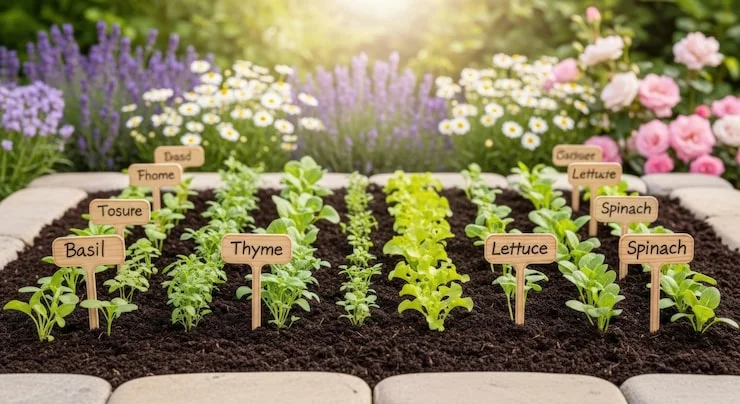
Your garden layout does not have to follow any single tradition. The style you choose depends on your space, your budget, and how you like to work. The main options are in-ground rows, raised beds, and containers.
In-ground rows work well if you have plenty of space and decent soil. You till or dig the ground, amend it with compost, and plant in long rows. This is the most traditional approach. It costs the least to start, but it requires more work to control weeds and maintain soil quality over time.
Raised beds offer more control. You build a frame, fill it with a soil mix, and plant intensively within that contained space . Raised beds warm up faster in spring, drain better, and keep your soil from getting compacted by foot traffic. A common size is four feet wide by eight feet long. Four feet is a good width because you can reach the center from either side without stepping into the bed . Leave at least eighteen to twenty-four inches between beds for walking and working .
Containers are the answer when you have no ground space at all, or when your native soil is contaminated or poor. Almost any vegetable can grow in a container if the pot is large enough. A tomato or pepper plant needs a container of at least five gallons, though seven to ten gallons is better . Smaller crops like lettuce, radishes, and herbs can grow in smaller pots. The key with containers is consistent watering, because they dry out much faster than garden soil.
Overcrowding is the single most common mistake in vegetable gardens. New gardeners look at tiny seedlings and cannot imagine they will ever fill the space. So they plant too close together. A few weeks later, the plants are tangled, air cannot move between them, and disease takes hold.
Spacing is not arbitrary. Each plant has a mature size, and that size determines how far apart it should be from its neighbors. You need to know two numbers: the distance from one plant to the next within a row, and the distance between rows.
For a quick reference, here are common spacing needs:
Large plants like tomatoes, peppers, cabbage, and broccoli need twelve to twenty-four inches between plants .
Medium plants like lettuce, bush beans, and beets need four to six inches .
Small plants like carrots, radishes, and onions can be planted two to three inches apart .
Sprawling plants like pumpkins, winter squash, and melons need twenty-four to thirty-six inches, and often more .
If you are gardening in raised beds, you can space plants closer together than in traditional rows. The soil is richer, and you are not leaving wide paths between rows. In a four-by-four bed, you can divide the surface into one-foot squares and plant according to a square-foot grid. A single tomato or pepper plant takes one square. Four lettuce plants fit in one square. Sixteen radishes or carrots fit in a single square .
The reason tighter spacing works in raised beds is that you are not wasting space on walkways. Every square inch is growing soil. But even in a raised bed, do not plant so tightly that leaves stay wet and air cannot circulate. Good airflow prevents fungal diseases like powdery mildew and blight .
A vegetable garden has a vertical dimension as well as a horizontal one. Tall plants cast shadows. If you plant them on the south side of your garden, they will shade everything behind them. The solution is simple: put tall plants on the north side of your layout, and short plants on the south side . This way, the sun travels across the garden and reaches every plant.
Vining crops like cucumbers, pole beans, and some squash can grow upward on trellises or cages. Vertical growing saves ground space and improves airflow around the leaves, which reduces disease . A trellis placed on the north edge of a bed lets you grow a vining crop without shading the rest of the garden.
Perennial crops need permanent spots. Asparagus, rhubarb, and strawberries come back year after year. Do not put them in the middle of your annual rotation plan. Give them a dedicated bed at the edge of the garden or along a fence line .
You May Also Like: Want to Know How to Start a Vegetable Garden?
Companion planting is the practice of growing certain plants near each other because they help one another. Some companions repel pests. Some attract beneficial insects that eat pests. Some improve flavor or growth. Just as important, some plants do poorly when grown together, and it helps to know which combinations to avoid.
Good companions include basil with tomatoes, which is a classic pairing. Basil is said to improve tomato growth and flavor, and it may help repel certain pests . Carrots and onions grow well together because onions can deter carrot fly . Corn, beans, and squash form the traditional “Three Sisters” grouping, where beans fix nitrogen in the soil, corn provides a trellis for the beans, and squash leaves shade the ground to suppress weeds .
Combinations to avoid include onions and beans. Onions can stunt the growth of beans and peas . Dill should not be planted near carrots, because they are in the same plant family and can cross-pollinate, which affects carrot quality . Tomatoes and corn are attacked by the same worm, so planting them together can increase pest problems .
You do not need to memorize every combination. Start with a few pairings that are well documented and work from there. A companion planting chart from a university extension service is a reliable reference .
If you grow vegetables in the same spot year after year, pests and diseases that live in the soil will build up. Crop rotation solves this by moving plant families to different beds each season. A simple four-year rotation is enough for most home gardens.
The idea is to group crops by family and move each group to a different bed each year. The main families are:
Nightshades: tomatoes, peppers, eggplant, potatoes
Brassicas: cabbage, broccoli, kale, cauliflower, Brussels sprouts
Legumes: beans, peas
Roots and alliums: carrots, beets, onions, garlic
Cucurbits: cucumbers, squash, melons, pumpkins
If you divide your garden into four beds or sections, you can rotate these groups so that no family returns to the same spot for at least three years . This breaks the life cycle of soil-borne pests and diseases that target specific plant families.
Rotation also helps with soil fertility. Legumes add nitrogen to the soil, so following them with heavy-feeding crops like brassicas or nightshades makes good use of that nitrogen.
Once you have made your decisions about site, style, spacing, and rotation, draw your plan. A simple sketch on graph paper works perfectly. Mark the dimensions of your beds or rows. Note the direction of the sun. Place tall crops on the north side and short crops on the south. Sketch in paths and trellises.
This paper plan becomes your planting guide. It also becomes a record. Write down what you planted and where. Next year, you can look back at your notes and rotate your crops correctly. A garden journal, even a simple notebook, makes you a better gardener over time.
Paths deserve a moment of thought. Make them wide enough to walk and kneel in comfortably. Eighteen inches is the minimum, but two feet or more is better . Wider paths are easier to maintain and make the garden feel less cramped. You can cover paths with mulch, wood chips, gravel, or grass. Cardboard covered with wood chips is a cheap and effective option that also suppresses weeds .
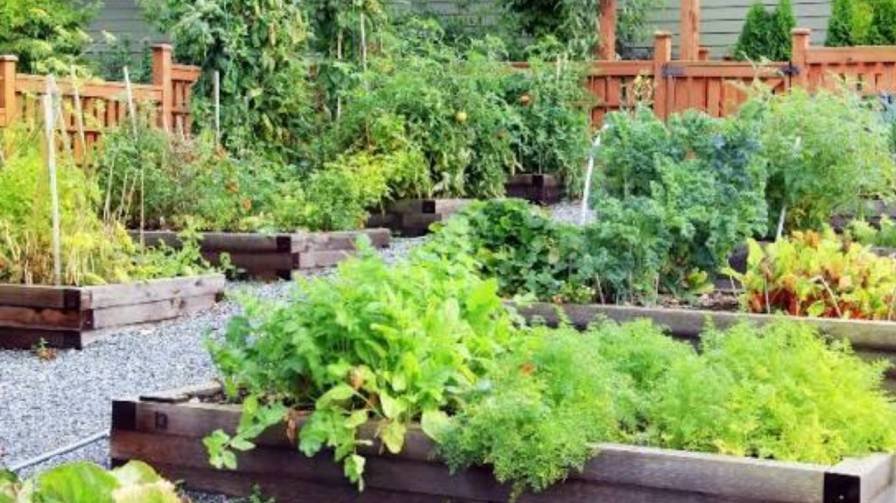
A layout that works in one climate may fail in another. The timing of your planting matters as much as the arrangement. Cool-season crops like lettuce, spinach, peas, and radishes grow best in spring and fall. Warm-season crops like tomatoes, peppers, and squash need the soil to warm up before they go in the ground.
If you live in a cold climate, you can extend your season with row covers, cold frames, or a greenhouse. If you live in a hot climate, you may need to provide afternoon shade for sensitive crops. The principle is the same: plan for the conditions your plants will actually experience, not the ones you wish you had.
Succession planting is another planning tool. Instead of planting all your lettuce at once, plant a small patch every two weeks. You get a steady supply of fresh greens instead of a glut followed by nothing . The same works for radishes, carrots, and beans.
Even experienced gardeners make these mistakes. Knowing them ahead of time helps you plan around them.
Planting too much. A garden that is too large becomes a chore. Start small. A single four-by-eight raised bed can produce a surprising amount of food. You can always expand once you know how much time you want to spend.
Ignoring mature size. That cute little zucchini seedling will become a sprawling plant that covers several square feet. Plan for the plant it will become, not the plant it is today.
Forgetting about airflow. Plants packed too tightly stay wet and develop disease. Leave room for air to move between them.
Putting tall plants in the wrong spot. A row of sunflowers or corn on the south side of your garden will shade everything behind it. Place tall crops on the north side.
Not leaving enough path space. Narrow paths become overgrown and unusable by midsummer. Wider is always better when it comes to paths.
Even a small space can produce food. A single raised bed of four feet by eight feet gives you thirty-two square feet of growing area. That is enough for a few tomato plants, a row of lettuce, some herbs, and a pepper plant or two . Container gardening on a patio or balcony works too.
Start with easy, productive crops. Lettuce, radishes, bush beans, and zucchini are forgiving and grow quickly. Tomatoes and peppers are rewarding but need more attention and warmer weather.
Yes, as long as they have similar sunlight, water, and spacing needs. Companion planting charts help you choose combinations that support each other. Avoid planting incompatible pairs like onions with beans or dill with carrots.
The best direction depends on your sun exposure and the height of your crops. In general, running rows east to west allows the most even sunlight across the garden. But the most important rule is to put tall plants on the north side so they do not shade shorter crops .
Raised beds give you more control over soil quality and drainage. They work well where native soil is poor, rocky, or contaminated. In-ground planting is cheaper and works fine if your soil is decent and drains well. Many gardeners use a mix of both.
Planning a vegetable garden layout is not complicated, but it does require you to think before you dig. Start with your site. Watch the sun. Check your water access. Decide whether raised beds, in-ground rows, or containers make the most sense for your space. Then map out your plants with their mature sizes in mind. Put tall crops on the north side. Leave enough room between plants for air to move. Plan your paths wide enough to use comfortably. Use companion planting and crop rotation to keep your soil and plants healthy.